Stargazing in the Wheatbelt: A Beginner’s Guide to the Night Sky 🌌
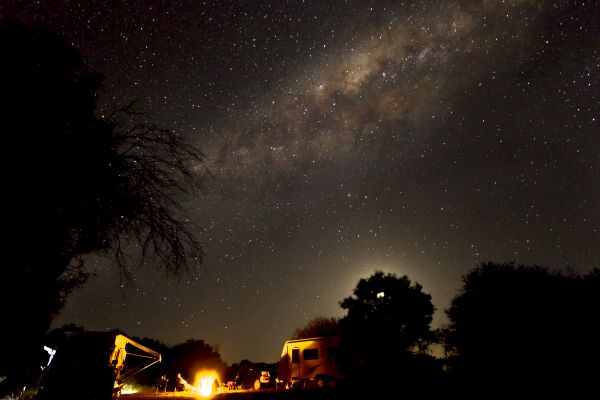
There’s nothing quite like the Wheatbelt night sky. With some of the darkest skies in the world, minimal light pollution, and vast open spaces, it’s the perfect setting to sit back, look up, and lose yourself among millions — even trillions — of shining stars.
The Southern Hemisphere is known as one of the best places on Earth to stargaze, and lucky for us, the Wheatbelt sits right in the heart of it. From here, you can see the Milky Way Galaxy in all its glory, the Southern Cross, the Magellanic Clouds, and the beautiful Aboriginal constellation “Emu in the Sky”.
We truly are spoiled — what many people travel across the world to see, we have right in our own backyard.
Stargazing Tips for Beginners
If you’re new to stargazing, here are a few simple tips to help you get the most out of your night under the stars:
- Don’t underestimate the naked eye – you don’t need fancy equipment to enjoy the view.
- Switch off all lights – even a small glow from your phone can impact how well you see the stars.
- Give your eyes time to adjust – allow at least 10 minutes for your eyes to adapt to the darkness and switch to “night vision.”
- Download a stargazing app – learn about the constellations, planets, and other celestial objects above you.
- Keep watch for shooting stars or satellites – you never know what surprises the sky has in store.
What to Look for in the Sky – Late 2025 Highlights
October
✨ The Magellanic Clouds – two nearby galaxies that appear as faint glowing patches in the southern sky.
✨ Halloween Trio – around the end of October, look out for Mars, Mercury, and the red star Antares aligning together for a rare and striking sight.
November
🌕 Supermoon (5 November) – when the Moon is closest to Earth, appearing larger and brighter than usual.
☄️ Leonids Meteor Shower – created by debris from comet Tempel-Tuttle, with up to 15 meteors visible per hour under dark skies.
December
🌠 Geminids Meteor Shower – one of the brightest and most active meteor showers of the year, originating from asteroid 3200 Phaethon.
☀️ Summer Solstice – the longest day of the year, when the Sun reaches its highest point in the sky in the Southern Hemisphere.
For more information on astro-tourism experiences and the best stargazing locations across WA, visit Astrotourism WA.
So next time you’re in the Wheatbelt, find a quiet reserve or a granite outcrop, wait until the sun dips below the horizon, and look up. You’ll be in awe of the beauty that’s always been right above you.